
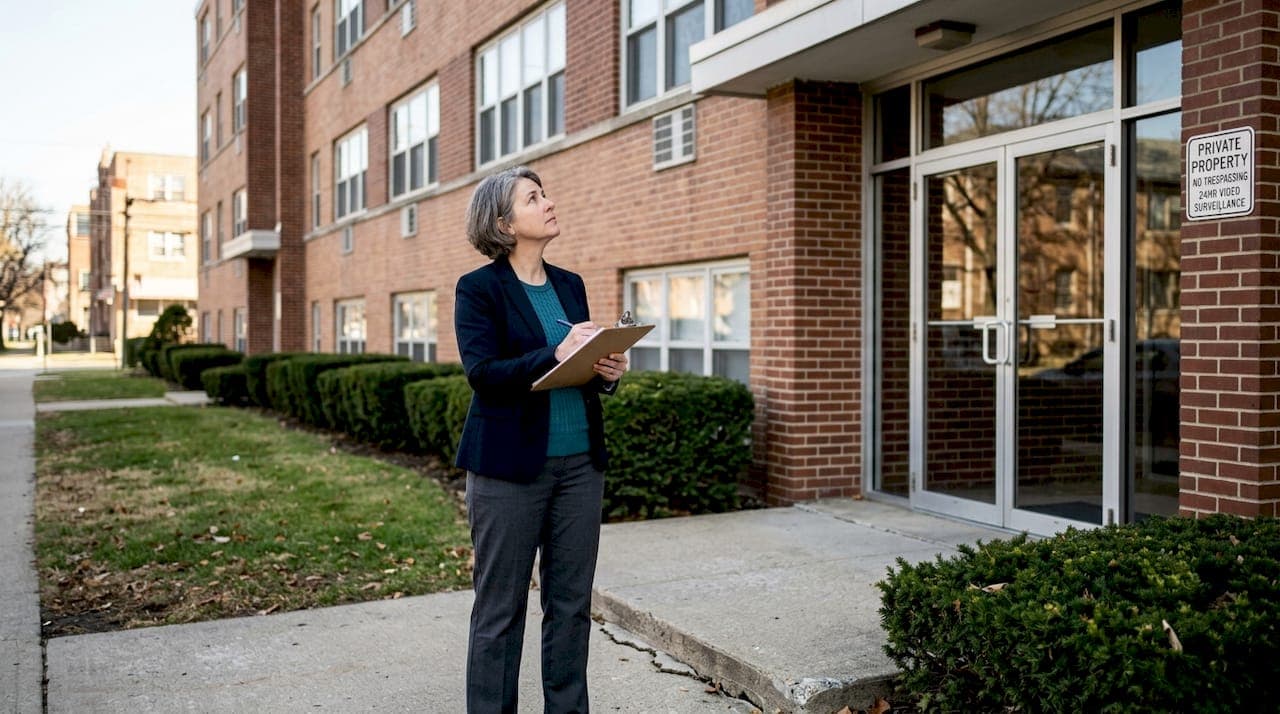
Most commercial property owners think professional appearance is about looking good for prospective tenants. That belief is costing them money, tenants, and in some cases, legal standing. A cracked facade, a faded exit sign, or an overgrown entryway are not just eyesores. They are signals to inspectors, insurers, and tenants that the property may not meet the standards required by law. This article breaks down what professional property appearance actually means for commercial spaces, why it overlaps with fire safety and compliance, and how you can build a practical system to stay ahead of both aesthetic and regulatory expectations.
Table of Contents
- Defining professional property appearance
- Core pillars of professional appearance
- The impact on compliance and fire safety regulations
- Practical strategies and common pitfalls
- Why appearance is a competitive advantage, not just a requirement
- Take your property appearance to the next level with expert help
- Frequently asked questions
Key Takeaways
| Point | Details |
|---|---|
| Clear definition matters | Professional property appearance is about consistent, standards-based presentation and not just surface appeal. |
| Compliance protects value | A professional appearance can help avoid legal penalties and maintain property value. |
| Invest in ongoing upkeep | Regular maintenance and audits prevent costly issues down the line. |
| Competitive edge | Well-presented properties attract better tenants and higher rents. |
Defining professional property appearance
With that broader context in mind, let's clarify what professional property appearance truly means.
Professional property appearance is not a vague standard. It refers to the consistent, high-quality presentation of a property across all visible and functional areas, aligned with recognized property standards in the commercial real estate industry. This covers everything from the parking lot and entryway to interior corridors, signage, lighting, and safety equipment.
The concept evolved from residential "curb appeal" into something far more structured for commercial spaces. In the 1990s, building management organizations began formalizing what it meant for a commercial property to look and function professionally. Today, it includes maintenance schedules, safety compliance, tenant experience, and even how a building communicates brand identity to visitors.
Here is what professional appearance covers in practice:
- Exterior surfaces: Clean facades, intact masonry, functional doors and windows
- Interior common areas: Consistent lighting, clean floors, clearly marked exits
- Safety and signage: Visible fire safety equipment, accessible emergency exits, compliant markings
- Functional systems: Working HVAC, elevators, and plumbing that do not create visible or odor-based issues
- Grounds and landscaping: Trimmed vegetation, clean walkways, and maintained parking areas
"Property appearance is directly linked to perceived rental value, making it a financial asset, not just an aesthetic preference."
Tenant satisfaction is also deeply tied to how a property looks and functions on a daily basis. When tenants see that a landlord maintains the property consistently, they feel more confident renewing leases. When they see neglect, they start looking elsewhere. Professional appearance is, at its core, a retention strategy.
Core pillars of professional appearance
Now that we have a solid definition, let's look at the main elements that make a property professionally presentable.
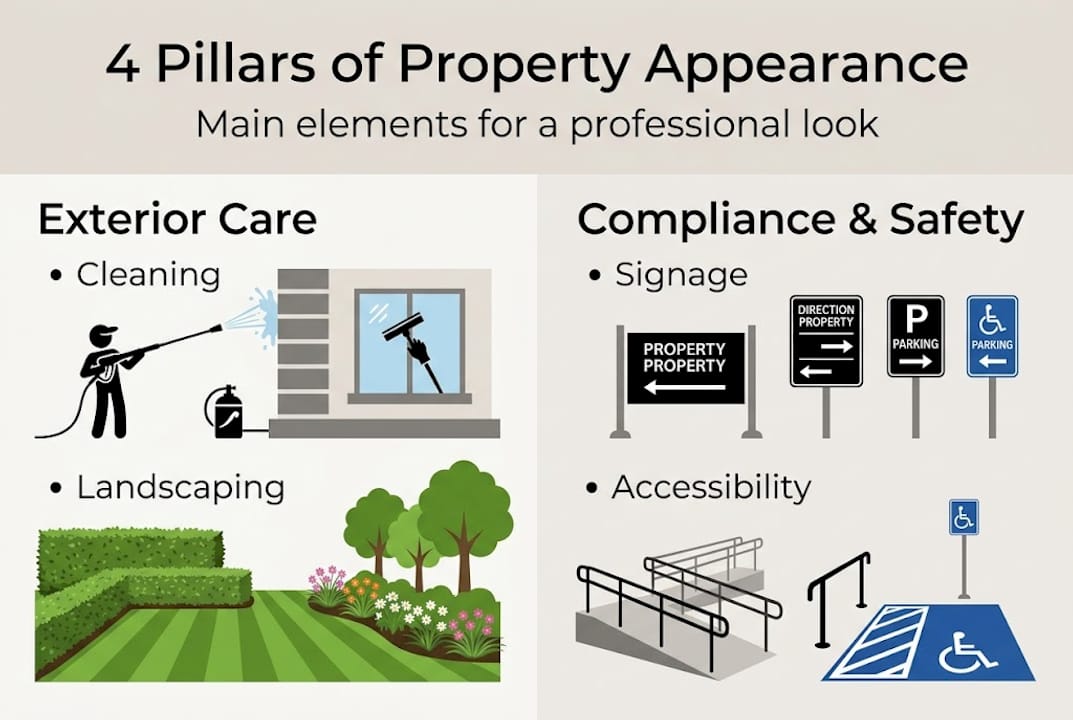
Think of professional appearance as a structure with four load-bearing pillars. Remove any one of them and the whole thing becomes unstable.
1. Cleaning and routine maintenance This is the foundation. Scheduled cleaning of common areas, exterior surfaces, and utility spaces prevents the kind of gradual decay that becomes expensive to fix. Well-maintained properties consistently support higher occupancy rates, which directly affects your bottom line.
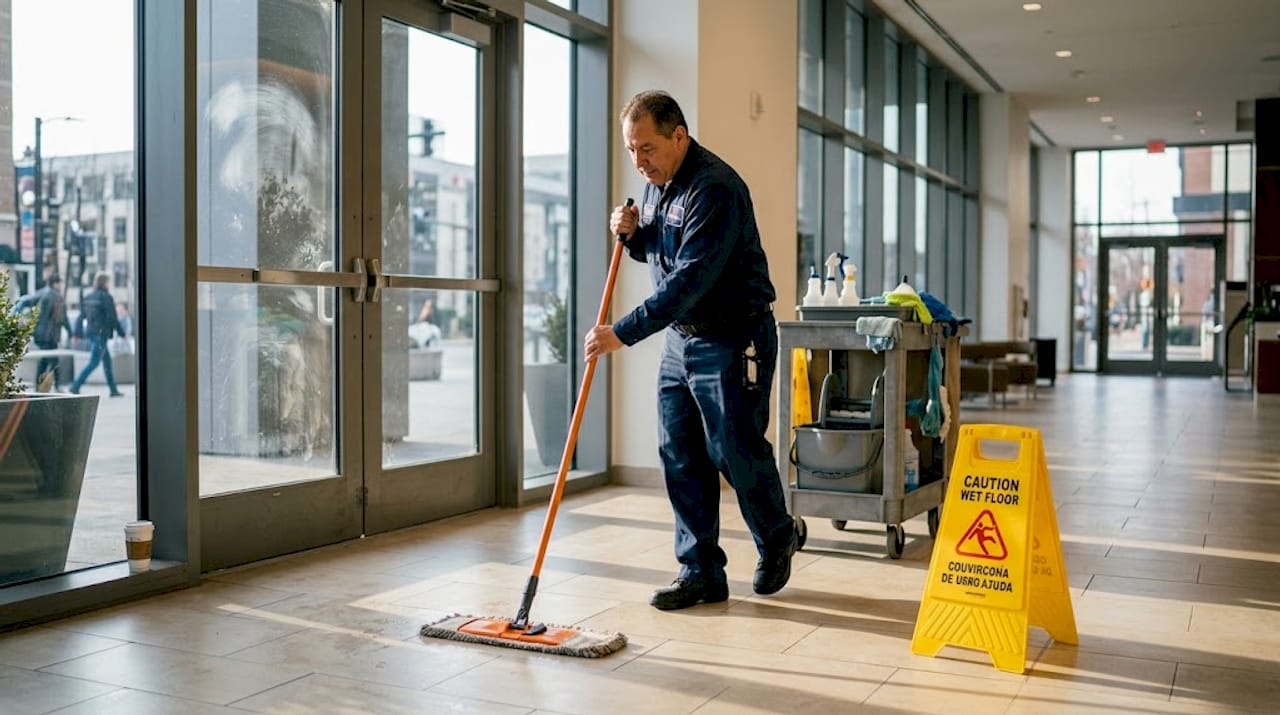
2. Landscaping, signage, and lighting Outdoor lighting serves both safety and aesthetic purposes. Proper signage guides tenants and visitors while reinforcing a professional image. Landscaping, even minimal, signals active ownership and care.
3. Safety features and compliance markings This is where appearance and legal obligation meet. Clear exit signs, visible fire extinguishers, and unobstructed emergency routes are not optional. They are required by code and must be maintained in a way that is both functional and visible.
4. Accessibility and ADA compliance Ramps, accessible restrooms, and compliant parking spaces are legal requirements under the Americans with Disabilities Act. They also communicate to tenants and visitors that your property is inclusive and professionally managed.
Here is a quick comparison of maintenance frequencies for key appearance elements:
| Element | Recommended frequency | Risk if neglected |
|---|---|---|
| Exterior cleaning | Quarterly | Staining, structural damage |
| Signage inspection | Semi-annually | Code violations, tenant confusion |
| Lighting checks | Monthly | Safety hazards, liability |
| Landscaping | Monthly (seasonal) | Poor curb appeal, pest risk |
| Fire safety equipment | Annually (minimum) | Fines, failed inspections |
Pro Tip: Schedule quarterly property audits that cover all four pillars at once. Catching a faded exit sign or a cracked sidewalk early costs a fraction of what it takes to fix after a violation notice or tenant complaint.
The impact on compliance and fire safety regulations
Understanding these pillars reveals how deeply property appearance is tied to essential compliance and safety requirements.
Fire safety compliance is one of the most serious legal obligations a commercial property owner carries. And here is the part most owners do not expect: many fire code violations are rooted in appearance-related neglect. Blocked exits, faded signage, and dirty or obstructed fire extinguisher cabinets are among the most common triggers for failed inspections.
According to fire code compliance data from the NFPA, a significant portion of violations cited during inspections involve conditions that are visible and preventable. These are not hidden electrical faults. They are things an attentive property manager would notice on a routine walkthrough.
Key compliance areas every commercial property owner must address:
- Exit signage: Must be illuminated, unobstructed, and visible from any point in the corridor
- Fire extinguishers: Must be mounted, accessible, inspected annually, and tagged with current service dates
- Emergency lighting: Must activate during power loss and illuminate all exit paths
- Sprinkler systems: Must be free of obstructions, including stored materials placed too close to heads
- Egress paths: Hallways and stairwells must remain clear of equipment, furniture, or debris
Here is how professional appearance and compliance overlap:
| Appearance issue | Compliance risk | Potential consequence |
|---|---|---|
| Faded exit sign | NFPA 101 violation | Fine, failed inspection |
| Blocked fire extinguisher | NFPA 10 violation | Fine, liability in fire event |
| Dim emergency lighting | Life Safety Code issue | Evacuation failure risk |
| Cluttered egress path | Fire code violation | Immediate correction order |
The financial stakes are real. Fines for fire code violations can range from hundreds to thousands of dollars per violation, and repeat offenses can trigger more serious enforcement actions. More importantly, a property that fails a fire inspection faces reputational damage that is hard to undo.
Practical strategies and common pitfalls
To apply these concepts, here is how you can practically enhance your property and avoid the pitfalls that trip up most owners.
Improving professional appearance does not require a massive budget. It requires a system. Most property owners who struggle with appearance issues do so because they react to problems rather than prevent them. Neglecting regular appearance checks leads directly to increased repair costs and higher tenant turnover, two outcomes that are far more expensive than a scheduled maintenance program.
Here is a step-by-step framework to get started:
- Conduct a baseline audit. Walk every area of your property with a checklist. Document every visible issue, from peeling paint to a missing exit sign.
- Prioritize by risk. Safety and compliance issues come first. Cosmetic improvements come second.
- Build a maintenance calendar. Assign recurring tasks with clear ownership and deadlines.
- Hire specialists for technical work. Fire safety equipment, masonry, and electrical systems require licensed professionals.
- Review and adjust quarterly. What worked last season may not address new issues.
Common mistakes that cost property owners time and money:
- Ignoring signage updates: Signs fade, crack, and become non-compliant over time. Many owners only notice during an inspection.
- Inconsistent cleaning schedules: Sporadic cleaning creates buildup that becomes a structural or health issue.
- Skipping lighting checks: A burned-out emergency light is invisible until there is an emergency.
- Deferring masonry repairs: Small cracks in brick or mortar grow quickly and become expensive to fix.
Pro Tip: Ask your tenants directly. A simple quarterly email asking about maintenance concerns gives you early warning on issues before they escalate into complaints or violations. Tenants notice things you walk past every day.
Why appearance is a competitive advantage, not just a requirement
Conventional wisdom treats property appearance as an operating expense, something to minimize. That framing is wrong, and it leads to short-sighted decisions that hurt long-term returns.
The best-maintained commercial properties do not just avoid violations. They command premium lease rates and attract tenants who stay longer. A property that looks professional signals to prospective tenants that the landlord is organized, responsive, and serious about the building. That perception translates directly into willingness to pay more per square foot.
We have seen this pattern repeatedly. A landlord invests in masonry repair, updated signage, and consistent exterior lighting. Within one lease cycle, vacancy drops and renewal rates climb. The investment was not large, but the signal it sent was powerful.
The uncomfortable truth is that most of your competition is doing the bare minimum. That means a modest, consistent investment in professional appearance puts you in a different category entirely. It is not just about compliance. It is about positioning your property as the obvious choice in a competitive market.
Take your property appearance to the next level with expert help
If you are ready to go further and secure these advantages with less effort, consider leveraging professional assistance.
Managing appearance, compliance, and fire safety across a commercial property is a lot to coordinate on your own. The details matter, and missing one can mean a failed inspection, a tenant complaint, or a fine that wipes out months of rental income.
At Blackstone Property Services, we provide fire extinguisher inspections, emergency lighting checks, NFPA code compliance reviews, masonry repair, and exterior maintenance, all designed to keep your property looking professional and staying compliant. Whether you manage one building or a full portfolio, our team can help you build a system that works. Get a fast quote or book your inspection today and take the guesswork out of property appearance and compliance.
Frequently asked questions
What is the difference between professional and regular property appearance?
Professional property appearance means consistent, high-standard upkeep that aligns with industry best practices and compliance requirements, going well beyond basic cleaning or occasional repairs.
How does property appearance affect fire safety compliance?
A well-maintained property reduces the risk of fire code violations by ensuring exits are clear, signage is visible, and equipment is accessible. Fire code violations often stem directly from visible, preventable neglect.
What steps can a landlord take to improve commercial property appearance?
Regular inspections, a structured maintenance calendar, and prompt repairs are the most effective starting points. A preventive maintenance guide from IREM confirms that proactive upkeep improves both property value and appearance over time.